
Amsterdam 2023: visiting Zaanse Schans
We usually take at least one trip out of the city when we stay in Amsterdam. Several other towns and cities are within easy reach by train and we’ve visited the bulb fields twice, though experience tells us that this early in the season (March) there might not be a lot to see. However, today we fancied windmills and set off for Zaanse Schans, last visited in 2011.
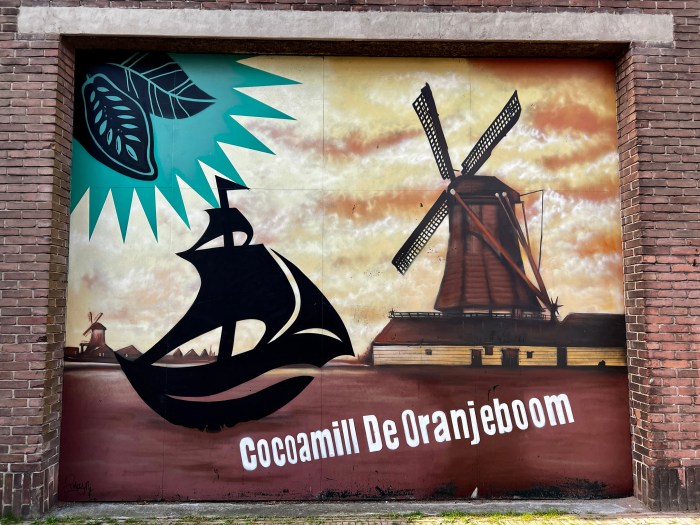
We took the train to Koog aan de Zaan from which it was a short walk to Zaanse Schans. We passed the Cacao de Zaan Visitor Centre, popularly known as the Cocoa Museum (header photo), but pressed on because we knew there would be plenty to see when we got to our destination. We also passed our first windmill and had a view of Zaanse Schans across the Zaan. We had to wait while the bridge across opened up to let boats through. This pretty little kiosk was on the other side.


And then we arrived. Zaanse Schans is a living and working community, but also a heritage site with multiple windmills, some working, and several museums. Not everything was here originally – many of the buildings were moved from elsewhere – but it does give you a picture of what life must have been like in the 18th and 19th centuries. The next gallery captures some of the buildings and street scenes that residents enjoy.


And the surrounding landscape. Flat as a pancake!


There were animals.


And of course, windmills! Lots of windmills.


On our first visit I had been interested to learn the different functions of windmills – sawmills, dye mills and oil mills – as I had imagined they were all for grain. De Kat paint mill, for example, is probably the last remaining paint windmill in the world and still sells antique paints and dyes.


It seems this was also the windmill we visited in 2011!


We visited two museums. The Windmill Museum is new since our last visit. The panorama, shown in full and in detail, is by Frans Mars (1903-1973) and depicts a time 200 years ago when more than 50 windmills lined the river. John had fun!


The other museum, Zaans Museum and Verkade Experience, we had visited before. Verkade made (still do, though no longer a family owned company) chocolate and biscuits and there is a large hall full of early 20th century production machinery with interactive displays.


And just in case there’s any doubt of course we had a good lunch in d’Swarte Walvis (the Black Whale), a restaurant comprising three historic buildings: Westzaan orphanage built in 1717, a merchant’s house and a storehouse.


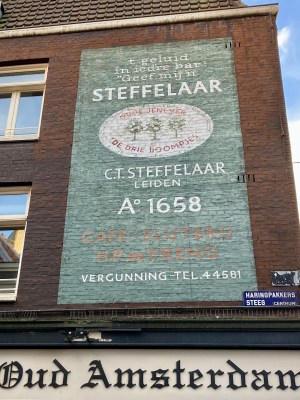
As always, on our way back from Central Station we spotted something interesting – this wall sign, which I’m sure has not been there since 1658 but is attractive anyway. That night, we ate Indian food again at Madras Diaries. The following day, Saturday, was our last full day in Amsterdam and we must have been tiring. We only visited one museum! Coming soon!


 The Glasgow Gallivanter
I’m making a note of this charming place for when we visit Amsterdam in possibly 2026? It looks very nice indeed. I love the little heart of wooden shoes. Sounds like you really love Amsterdam and the surrounds.
LikeLike
We do really love Amsterdam! It is our home from home.
LikeLiked by 1 person
I visited this site with a friend years ago. It was nice to be reminded of all of these windmills. (Suzanne)
LikeLike
The windmills are so attractive, lovely to see so many at once.
LikeLike
Hi Anabel – wonderful photos and descriptions … I’d definitely visit if I ever get over to NL … fascinating area. Windmills and Cacao, good food and informative life: what’s not to like … cheers Hilary
LikeLike
Thanks Hilary. It’s a very pretty place to visit.
LikeLiked by 1 person
The windmills are gorgeous. Some great photos Anabel.
LikeLike
Thank you!
LikeLiked by 1 person
Such a pretty town.
LikeLike
It is, thanks!
LikeLike
How lovely! I was so disappointed that I didn’t get to see any working windmills when I visited the Netherlands. But then, there’s only so much you can accomplish in one day!
LikeLike
Exactly! And always something to go back for.
LikeLiked by 1 person
You must have been in danger of being “windmilled out” during that visit!
I’m sure the engineer wouldn’t get bored, though!
LikeLiked by 1 person
No, he loved it! And it was just enough for me.
LikeLiked by 2 people
What an interesting place. I wonder if my daughter went there as she has some rather lovely photos of windmills from her visit to Amsterdam many years ago. And I spotted that rather fabulous post box!
LikeLike
Maybe – it’s very close to Amsterdam. Yes, the post box is lovely!
LikeLiked by 1 person
One thing I found travelling is that Europe is such a patchwork quilt of different landscapes round every corner, probably because it’s been settled for so long. You can drive the same distance in inland Australia and the landscape does not change that much at all for long periods. Made me appreciate the UK more when I got back. And all the water we take for granted here spread all over the land. Bob. BSS.
LikeLike
Possibly more water than we would like sometimes, but it certainly does make for a green and vibrant landscape!
LikeLiked by 1 person
I imagine mills were used for just about anything that required power. We went to a sawmill and a working water mill – used to pump water out to sea. That one was fascinating, as it used an auger to raise the water. I have a post on my blog about it. Watching the miller demonstrate is so cool. I loved that clog collage! Such an interesting variety of buildings and decorative things.
LikeLike
It really just hadn’t occurred to me! Although we’ve now been twice, we haven’t made it into the very small museums such as the clog museum – next time!
LikeLiked by 1 person
One of the things we enjoy most about European countries is the ability to travel out of the cities to smaller towns by train, and this day trip of yours is the perfect example. What a fun and interesting place to visit for the day.
LikeLike
Yes, we have done several day trips in the past to Delft, Haarlem and Utrecht. Den Haag and Rotterdam still on the list! I have been to both (when John was at a conference in Delft I took the train from there) but he hasn’t.
LikeLiked by 1 person
I admire your capacity to get the most out of your visits.
LikeLike
We certainly do our best!
LikeLike
Fascinating. I always thought windmills were only for grain.
LikeLike
Yes, that was a surprise to me too.
LikeLiked by 1 person
Hi, Anabel – I love exploring all of these historic areas with you. I continue to learn a great deal from your posts. And the lunches? I never (ever) doubt that they will be immensely satisfying!
LikeLike
But of course! We have a good eye for a good lunch venue 😃.
LikeLiked by 1 person
Fascinating area, so much history. The Dutch culture was prominent in Whakatane, where we lived as a family. Les and I visited a working windmill when we cruised around Friesland on our rented boat.
Aren’t the Dutch people incredible cycling no matter what the weather.
LikeLike
That would be an interesting cruise! Yes, they are very dedicated cyclists.
LikeLiked by 1 person
It was an interesting cruising the canals and lakes at our own speed. We could learn much from the Dutch regarding cycling instead of using vehicles. Unfortunately, NZers love their cars.
LikeLiked by 1 person
What an interesting trip and such a lovely read over breakfast this Saturday morning.
LikeLike
Glad you enjoyed it!
LikeLike
This would be my out of city expedition of choice too. I’ve read about and seen photos of it before and I’d love to see it in person.
LikeLike
It’s very pretty, Jo, and lots of interesting things to do and see.
LikeLiked by 1 person
Fascinating to see the history of all the windmills. We were there the year Frans Mars died!! So long ago and so many changes! Thank you for bringing it all up to date with all your great photos and script!
LikeLike
Eight years before our first visit to Amsterdam then, and 38 before we got to Zaanse Schans! I’m sure it has changed a lot in that time.
LikeLiked by 1 person
What pretty sights you’ve seen, and all with such interesting histories too. It’s good to get out of the city sometimes too, isn’t it?
LikeLike
It is nice to get away from the city bustle for a bit, and it was very easy and quick to get there.
LikeLiked by 1 person
I like the mill panorama and the detail on the 1795 house, it’s beautiful. And I have that mouse record by Ronnie Hilton, my mum bought it for me when it came out in 1965 :)
LikeLike
Ah, you are back in your usual persona! Yes, the 1795 house is lovely. I remember that song being on the radio often, though I don’t think we ever possessed a record.
LikeLike
It really couldn’t look more Dutch if it tried! Great for photos and interesting history too – I never heard of a paint mill for instance.
LikeLike
It was a surprise to me too, the first time we visited.
LikeLiked by 1 person
Trying to comment but W/P won’t have it – this is an experiment, if it works I’ll comment properly later so feel free to delete this.
LikeLike
Seemed to need approval. Should be ok now?
LikeLike
It keeps asking me to log in using an old email address which I no longer use or have the password for. I have to go to work now but I’ll try to sort it out later – I’ve never had this problem before, it happened earlier on someone else’s blog too.
LikeLiked by 1 person
Whenever anyone mentions windmills, all I can think of is that song from my childhood.
A mouse lived in a windmill
Sorry! :)
LikeLike
I remember that song too!
LikeLiked by 1 person