
Christmas in Northumberland: Boulmer
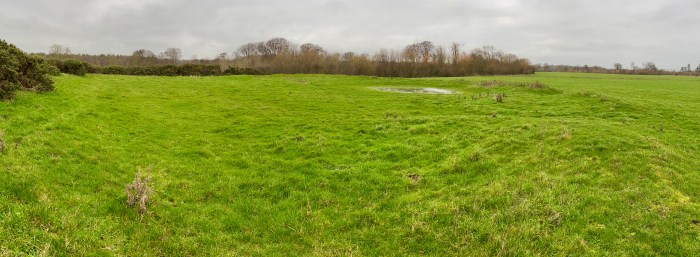
As we did when walking to Dunstanburgh, on day three of our Christmas break we left the car at home and walked the coastal path, this time in the opposite direction to Boulmer (pronounced Boomer). Near the beginning of the walk we detoured up a small hill to an Iron Age defended settlement, or hillfort, built between 2000 and 3000 years ago (above). It doesn’t look much but you can make out the circular bowl partially surrounded by the remains of a stone and earth rampart. Roman coins and fragments of iron sword blades were found here in the 19th century.
After the fort there was a succession of pretty bays along the coast, though it was windy and chilly so we didn’t stop for many photographs.


As we neared Boulmer we came across some unusual bird life, I think made by the local farmer out of scrap metal.


Our object in Boulmer was lunch – we had read very good reviews of the Fishing Boat Inn and it did not disappoint. Boulmer was once legendary for its smugglers with the Inn allegedly the centre of the illicit activities. By this time we had very clarty boots so made sure to use the provided boot-scraper before we went in.


There was not much else to look at in Boulmer. I liked the red boat and the row of street furniture, including a Little Free Library. These seemed to be very popular in the area: we came across several.


After lunch we retraced our steps back to Howick, this time stopping to admire the Bathing House, another rental cottage owned by the Howick Estate. Built in the early 19th century by the 2nd Earl Grey it was intended for his 15 children to stay in when bathing in the sea below.


Given that the sea below is known as Rumbling Kern, and looked quite wild, I’m not sure how often I would encourage children to go swimming there!


From here it was a short walk back to our own cottage and another cosy night in. The following day we headed for Newton-by-the-Sea.
Linked to Jo’s Monday Walk.


 The Glasgow Gallivanter